
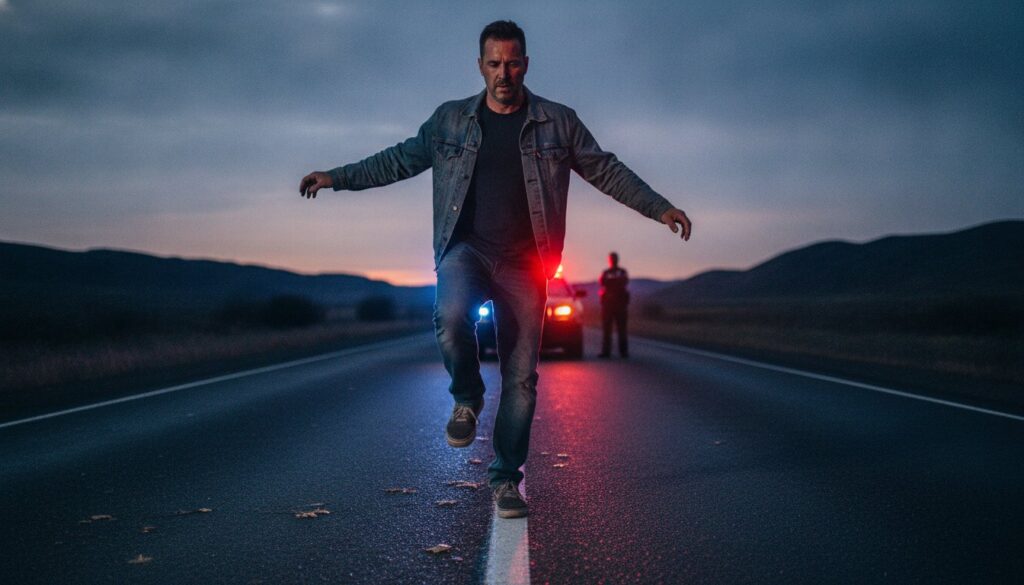
What if the “fail” marked on your police report wasn’t a reflection of your sobriety, but the predictable result of a subjective exercise designed for you to lose? For many drivers in the Treasure Valley, the realization that they’ve been labeled “impaired” based on a roadside balance test brings a wave of paralyzing anxiety. You might feel confused about how you could fail when you felt perfectly sober, and you’re likely terrified that this single subjective opinion will cost you your driver’s license.
It’s a heavy burden to carry, but you don’t have to accept the officer’s version of events as the final word. A strategic field sobriety test challenge in Idaho can expose the technical errors and physiological factors that lead to false positives. Discover how a battle-hardened legal defense can dismantle these results and protect your future. We’ll explore the critical difference between mandatory chemical tests and voluntary roadside exercises, while outlining the path to suppressing evidence and securing the aggressive representation you need to avoid a DUI conviction.
Key Takeaways
- Recognize that field sobriety tests are voluntary investigative tools in Idaho, not mandatory requirements like evidentiary breath or blood tests.
- Learn how a focused field sobriety test challenge Idaho can expose officer errors in NHTSA protocols, rendering their “fail” label legally invalid.
- Identify how external factors like Treasure Valley wind, ice, and uneven pavement create physical hurdles that police often mistake for impairment.
- Understand the power of a Motion to Suppress to strike subjective roadside evidence from your case and dismantle the prosecution’s foundation.
- Discover why proactive, battle-hardened advocacy in Ada and Canyon County is essential for shielding your driving privileges and your future.
What is an Idaho Field Sobriety Test? Myth vs. Reality
When a Boise or Meridian police officer asks you to step out of your vehicle, the power dynamic shifts instantly. You are no longer just a driver; you are the subject of a criminal investigation. Most people believe they are required by law to perform Field Sobriety Tests (SFSTs). This is a dangerous misconception. These exercises are not scientific measurements of your blood alcohol content. Instead, they are subjective “divided attention” tasks designed to help an officer gather enough evidence to justify an arrest.
In Idaho, law enforcement typically relies on three specific tests standardized by the National Highway Traffic Safety Administration (NHTSA):
- Horizontal Gaze Nystagmus (HGN): The officer follows your eye movement with a penlight to look for involuntary jerking.
- Walk-and-Turn: You are asked to take nine heel-to-toe steps along a straight line, turn in a specific manner, and return.
- One-Leg Stand: You must balance on one foot while counting aloud for approximately thirty seconds.
There is a critical legal distinction you must understand. Idaho’s “implied consent” law applies to evidentiary chemical tests, such as breathalyzers or blood draws, after a lawful arrest. It does not apply to roadside gymnastics. You have the right to decline these tests. A field sobriety test challenge Idaho often begins by highlighting that these tests are voluntary and frequently unreliable indicators of actual impairment.
The ‘Voluntary’ Trap: Do You Have to Perform FSTs?
Officers rarely frame FSTs as an option. They use authoritative language that makes the request sound like a mandatory command. You can politely decline to participate in these physical tests without facing the automatic license suspension that follows a breathalyzer refusal. While an officer might still arrest you based on other observations, such as the smell of alcohol or slurred speech, refusing the FSTs prevents the prosecution from using “failed” balance scores against you in court. Declining these tests limits the “probable cause” evidence the officer can include in their report.
Why ‘Failing’ Doesn’t Mean You Are Guilty
Even when administered under ideal conditions, these tests are far from foolproof. Research suggests that the One-Leg Stand is only about 65 percent accurate in predicting a BAC of 0.08 or higher, while the Walk-and-Turn sits near 66 percent. This means that even if an officer claims you “failed,” there is a significant margin for error. These exercises measure your ability to process multiple instructions while performing physical movements. Factors like fatigue, anxiety, or physical injury can easily mimic impairment. If you’ve already been charged, you need to understand how to fight a DUI in Idaho by attacking the subjective nature of these roadside evaluations. A “fail” on a police report is an opinion, not a medical fact.
Challenging the NHTSA Standards: When Officers Fail the Test
Police officers often project an image of infallible expertise during a roadside stop. They want you to believe their training makes their observations objective. It doesn’t. The National Highway Traffic Safety Administration (NHTSA) provides a specific, rigid manual that dictates exactly how these tests must be explained, demonstrated, and scored. If an officer deviates from these instructions by even a small margin, the scientific reliability of the entire exercise vanishes. Our defense strategy focuses on holding law enforcement to the same standards they use to judge you. When an officer treats the 2023 NHTSA manual as a suggestion rather than a requirement, they create the perfect opening for a field sobriety test challenge Idaho.
During the Walk-and-Turn (WAT) and One-Leg Stand (OLS), officers are trained to look for specific “clues” of impairment. In the WAT, they look for eight distinct markers, such as starting before the instructions are finished or failing to touch heel-to-toe. In the OLS, they watch for swaying, hopping, or putting your foot down. However, these clues are only valid if the officer provides a clear, unobstructed surface and follows the script perfectly. We meticulously review bodycam footage to identify every instance where an officer’s sloppy administration led to an unfair “fail” on your report. If you are facing charges in Ada or Canyon County, securing a proactive defense is the only way to ensure these technical errors are exposed in court.
The Horizontal Gaze Nystagmus (HGN) Challenge
The HGN test involves an officer tracking your eye movement with a stimulus, usually a penlight or finger. They are looking for nystagmus, which is an involuntary jerking of the eyeball. This is the most complex test to administer and the most prone to officer error. NHTSA standards require the stimulus to be held 12 to 15 inches from your face and moved at a very specific speed. If the officer moves the light too fast or holds it at the wrong angle, they can actually cause the jerking they claim is proof of intoxication. Additionally, common medical conditions like inner ear infections, certain prescription medications, or natural “physiological nystagmus” can produce these same results in perfectly sober individuals.
Instructional Errors and ‘Divided Attention’
Standardized tests are designed to be “divided attention” tasks. They force you to process mental instructions while performing physical movements. In the high-stress environment of a Boise roadside stop, even a sober person can become overwhelmed by rapid-fire or confusing directions. Officers often bark orders in a way that prioritizes speed over clarity, leading to “failures” that are actually just symptoms of nerves and confusion. Standardized is a strict legal requirement, not a suggestion. If the officer changes the wording or fails to demonstrate the move correctly, the test is no longer standardized, and its results should not be used against you.
Environmental and Physical Factors: The Idaho Roadside Reality
When an officer scores your performance, they assume you’re operating in a controlled environment. They ignore that Idaho’s geography and unpredictable weather transform a simple balance test into an impossible feat. A successful field sobriety test challenge Idaho often hinges on documenting these external variables. Police reports rarely mention the 20-mph wind gusts in the Treasure Valley or the slick, icy patches on the asphalt. They focus only on your “failure,” ignoring the environmental context that made success nearly impossible for any driver.
Roadside Conditions in Boise and Nampa
Consider the setting of a typical stop on I-84 or Highway 20/26. You aren’t on a flat gym floor. You’re likely on a sloped shoulder covered in loose gravel or cracked pavement. Passing semi-trucks create significant wind resistance and noise that can knock even a sober person off balance. Then there’s the “dazzle” effect. High-intensity strobe lights from a patrol car don’t just provide visibility; they cause disorientation and visual impairment, especially during the HGN test. If you’re stopped during a Boise winter, extreme cold causes shivering and loss of fine motor skills. Shivering isn’t a sign of intoxication. It’s a biological response to freezing temperatures that police frequently mischaracterize as instability.
Physical and Medical Pre-existing Conditions
Your own body might be the reason you “failed,” regardless of what you drank. NHTSA guidelines admit these tests are unreliable for specific groups. If you’re over the age of 65 or more than 50 pounds overweight, the Walk-and-Turn and One-Leg Stand lose their validity. Chronic back issues, old leg injuries, or inner ear imbalances can make roadside gymnastics a trap. Even your choice of clothing matters. Idahoans often wear heavy work boots or cowboy boots, and many women wear high heels. Performing a heel-to-toe walk in these shoes is inherently difficult. We confront these “false failures” by bringing your medical history and the physical reality of the stop to the forefront of your defense. You shouldn’t lose your license because of an old football injury or a pair of boots. We fight to ensure the judge understands that your physical limitations aren’t evidence of a crime.
Legal Strategies for a Field Sobriety Test Challenge in Idaho
A “failed” test result is only as strong as the officer’s ability to defend it under oath. You must realize that the police report is not a neutral document; it is the prosecution’s opening move in a high-stakes game. Our job is to counter that move with a Motion to Suppress. This is a formal legal request asking the judge to throw out the test results entirely. If we can prove that the officer lacked reasonable suspicion to stop you or failed to follow NHTSA protocols, the judge may rule that the evidence is inadmissible. When the foundation of the case is removed through a field sobriety test challenge Idaho, the entire DUI charge often collapses, leading to a dismissal or a significant reduction in charges.
We often utilize expert witnesses to dismantle the prosecution’s narrative. These experts, frequently former law enforcement instructors or forensic scientists, testify about the inherent unreliability of SFSTs. They provide the scientific weight needed to show that your “clues” were actually normal physical reactions or the result of poor instructions. This is a critical component of navigating the Idaho DUI sentencing guidelines. By successfully challenging the evidence, you move from a position of vulnerability to one of strength, potentially avoiding mandatory jail time and long-term license suspensions. If you are ready to fight back, contact our Boise DUI defense team today to begin building your defense.
Cross-Examining the Arresting Officer
In the courtroom, the officer’s training manual becomes our most effective weapon. We don’t just ask questions; we expose contradictions. By comparing the written police report to the dashcam and bodycam footage, we often find that the officer’s memory is “sharper” on paper than it was on the side of the road. If the report claims you stepped off the line, but the video shows you maintained your balance despite passing traffic, the officer’s credibility is destroyed. We force the officer to admit that their assessment was subjective and that they ignored the environmental factors we’ve already documented. This pressure often forces the prosecution to reconsider their stance before the trial even begins.
Challenging Probable Cause for Arrest
If the FST results are suppressed, the prosecution must face a difficult question: Did the officer have enough evidence to arrest you in the first place? This leads to the “Fruit of the Poisonous Tree” doctrine. If the initial arrest was based on flawed or illegally obtained FST data, then any evidence gathered after that arrest, including breathalyzer or blood test results, may also be thrown out. This strategy is especially powerful in cases involving a breathalyzer refusal Idaho. Without the FSTs to bolster their “probable cause,” the officer’s decision to take you into custody becomes legally indefensible. We fight to ensure that one mistake by an officer leads to the protection of your constitutional rights.
Why You Need a Battle-Hardened Boise DUI Attorney
The prosecution’s case often rests on a foundation of subjective observations they masquerade as scientific fact. You need a shield against this “pseudo-science.” A field sobriety test challenge Idaho requires more than just a general understanding of the law; it demands an intimate familiarity with how local officers in Boise, Meridian, and Nampa actually conduct their stops. We don’t wait for the prosecution to hand over evidence. We proactively investigate every second of your roadside interaction, from the moment the patrol lights appeared in your rearview mirror to the final “clue” recorded in the officer’s notebook. This aggressive stance is the only way to expose the technical failures that lead to wrongful convictions.
Time is your greatest enemy after a DUI arrest. In Idaho, you have exactly seven days from the date of your arrest to request an Administrative License Suspension (ALS) hearing with the Idaho Transportation Department. If you miss this deadline, your driving privileges are automatically suspended, regardless of what happens in your criminal case. This urgency defines our approach. We move quickly to secure dashcam footage and witness statements before they disappear. Our role is to act as your strategic force against a system that is designed to process you as quickly as possible. We provide the professional confidence and battle-hardened advocacy you need to stand your ground.
Strategic Defense for the Treasure Valley
Our deep roots in Ada and Canyon County give our clients a distinct advantage. We understand the specific tendencies of law enforcement agencies across the region, allowing us to tailor our approach to your specific venue. Whether you are facing DUI defense in Nampa or dealing with a stop by the Boise Police Department, we apply personalized attention to every detail. We know which officers have a history of instructional errors and which stretches of Idaho road are notorious for uneven surfaces that invalidate balance tests. This local expertise ensures your defense isn’t generic; it’s built for the specific courtroom where your future will be decided.
Take Action: Your Free Consultation
You don’t have to face this complex system alone. During your first meeting, bring a copy of your police report and any citations you received. These documents allow us to perform an immediate assessment of your field sobriety test challenge Idaho. We prioritize accessibility by offering payment plans, ensuring that a high-level defense is within reach when you need it most. Don’t let a subjective “fail” on a roadside test dictate the rest of your life. Secure your free consultation with a Boise DUI lawyer today and take the first step toward protecting your rights and your freedom.
Reclaim Your Future from a Subjective “Fail”
The prosecution wants you to believe their case is airtight, but the reality is much more fragile. A police officer’s subjective opinion shouldn’t dictate the course of your life. Roadside exercises are built to gather evidence against you, not to prove your innocence. By exposing the technical flaws in NHTSA protocols and the impact of Idaho’s harsh environmental conditions, you can regain control. A strategic field sobriety test challenge Idaho provides the leverage needed to expose officer error and fight for a dismissal.
Our firm brings aggressive trial advocacy and specialized expertise in Treasure Valley DUI law to every case. We understand the gravity of your situation and offer flexible payment plans to ensure a high-level defense is within your reach. Stop living in uncertainty and start building your shield against the prosecution today. You have the right to challenge the officer’s narrative and preserve your freedom.
Fight Your Idaho DUI Charges—Schedule a Free Consultation Now. We are ready to stand as your advocate and fight for the best possible outcome in your case.
Common Questions About Idaho Field Sobriety Tests
Is it better to refuse the field sobriety tests in Idaho?
Declining field sobriety tests is often a strategic choice because these exercises are designed to build a case against you. Unlike evidentiary breath or blood tests, there is no “implied consent” penalty for refusing roadside balance tests in Idaho. By politely declining, you limit the amount of subjective evidence an officer can use to justify your arrest and subsequent prosecution.
Can I be arrested for DUI if I pass the breathalyzer but fail the FSTs?
You can still be arrested and convicted under Idaho’s “impairment theory” even if your BAC is below the legal limit. If an officer believes your physical or mental abilities are noticeably impaired, they can use your performance on roadside tests as the primary basis for the arrest. This makes a field sobriety test challenge Idaho essential for cases where the chemical evidence is weak or non-existent.
What are the three standardized field sobriety tests used in Boise?
Law enforcement in Boise and across the Treasure Valley utilizes the three tests validated by NHTSA: the Horizontal Gaze Nystagmus (HGN), the Walk-and-Turn, and the One-Leg Stand. These are the only “standardized” exercises recognized by the courts. Any other tests, such as reciting the alphabet or touching your nose, are non-standardized and carry significantly less weight as evidence in a criminal proceeding.
How do medical conditions affect field sobriety test results?
Medical conditions like inner ear infections, vertigo, or chronic back and leg injuries can directly cause “clues” that officers mistake for intoxication. Neurological conditions or certain prescription medications can also trigger nystagmus, which will cause a false failure on the HGN eye test. We proactively use your medical records to prove that your physical performance was a result of health issues rather than alcohol consumption.
Can an officer force me to do a field sobriety test in Idaho?
No officer in Idaho can legally force you to perform a field sobriety test. While they may use authoritative language or tell you it’s your “chance to prove you’re sober,” the decision is entirely yours. It’s important to remain polite during the interaction, but you should clearly state that you are declining the physical tests to protect your rights.
What happens if the officer didn’t demonstrate the test correctly?
If an officer fails to demonstrate the test according to NHTSA standards, the results are no longer considered “standardized” and their reliability is compromised. This failure is a primary target for a Motion to Suppress. When the officer deviates from the strict instructional requirements, we argue that the results are scientifically invalid and should be excluded from the evidence presented against you.
Will my ‘failure’ on the roadside tests be shown to a jury?
Unless your defense attorney successfully wins a Motion to Suppress, the prosecution will likely play bodycam footage of your “failure” for the jury. Jurors often find this footage very persuasive, even if the test was poorly administered. This is why a proactive field sobriety test challenge Idaho is critical. Our goal is to prevent the jury from ever seeing flawed roadside evidence that could unfairly bias their verdict.
How can a lawyer help if I already admitted I was drinking?
Admitting to drinking is not the same as admitting to being legally impaired. A battle-hardened attorney can argue that your statements were made under duress or that the amount consumed did not reach the level of legal impairment. We focus on the gap between “having a drink” and “driving under the influence,” using technical errors in the police investigation to create reasonable doubt and protect your future.